
Works on paper · photographs · prints · posters
Works on paper need support, space and the right glazing.
Paper, photographs, prints and posters all behave differently. We look at the media, condition, edges and existing mount before deciding whether to mat, float or use another approach.
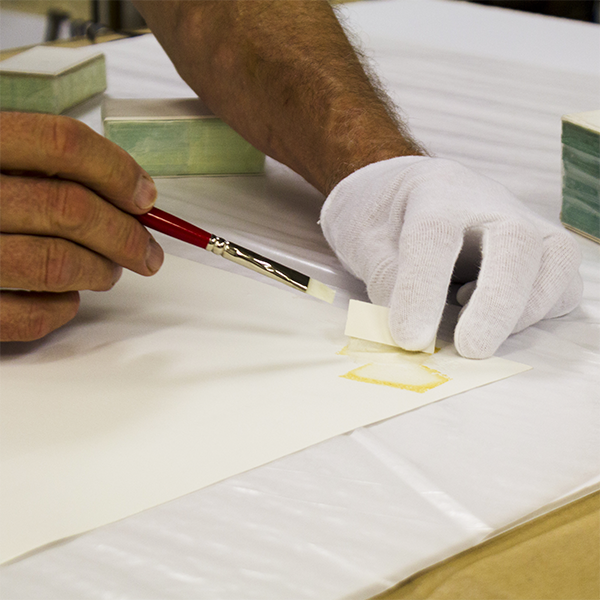
Presentation & mounting
Choose the presentation around the sheet.
Presentation and mounting are separate decisions. The important part is supporting the sheet properly and maintaining enough clearance from the glazing.
Window mat
A mat creates a defined border and glazing clearance. It works well when the image benefits from a field around it and the sheet edge does not need to show.
Float mount
The full sheet edge remains visible. Deckled edges, handmade paper and plate marks can all make that the better presentation.
Attachment
Hinges, corners, strips or other supports are selected for the paper and medium. We avoid unnecessary permanent changes when a less invasive method will safely hold the work.
Fabric-wrapped mats, French lines, specialty openings and multi-ply mats can be used when they suit the work.
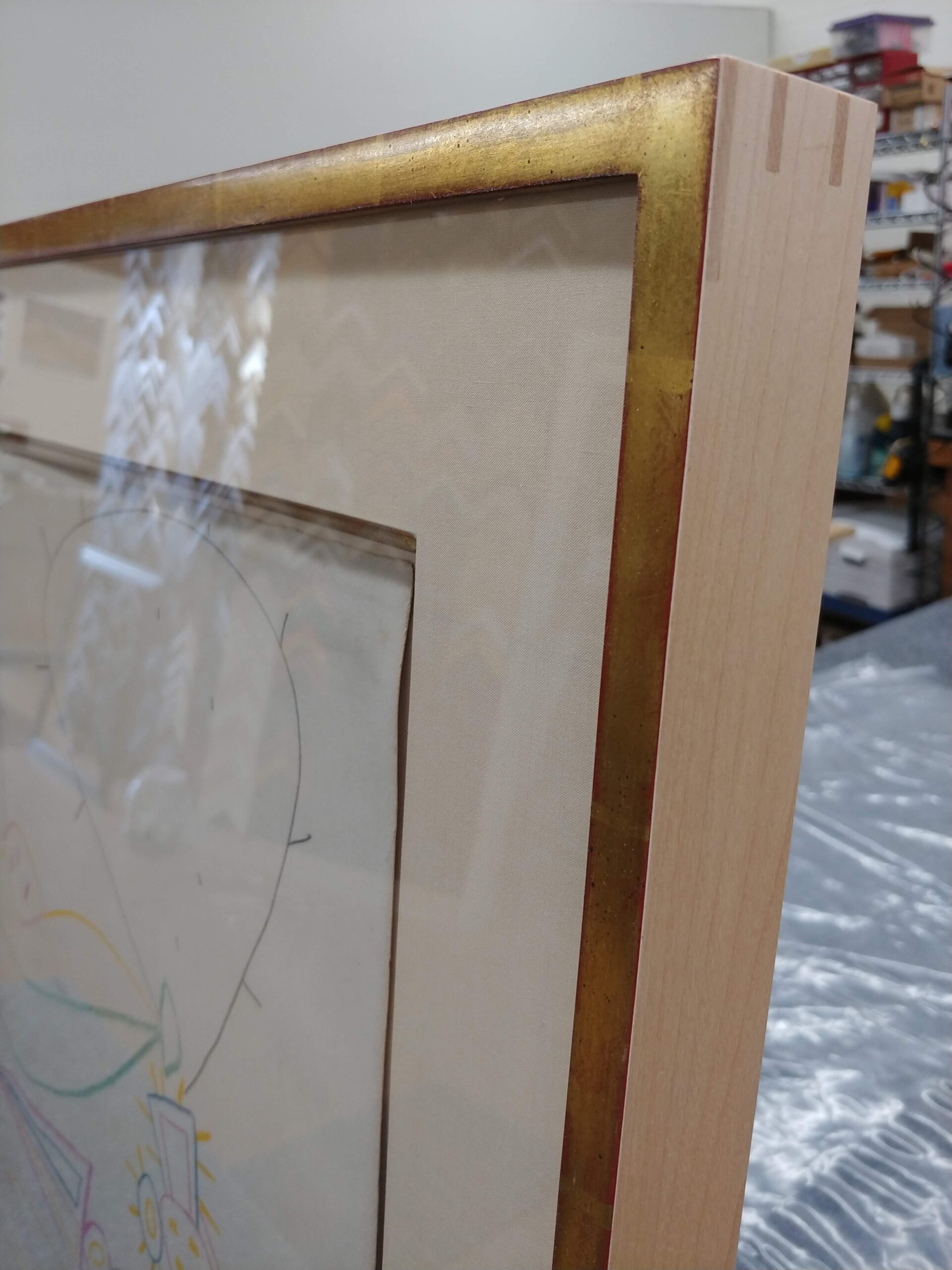
Glazing
Glass and acrylic solve different problems.
Weight, breakage, static, reflection and the surface of the artwork all affect the choice.
Glass
- Rigid and low-static
- Very good surface hardness
- Weight and breakage increase with size
Acrylic
- Lighter and harder to break
- Useful for large work and shipping
- Needs enough thickness to stay flat
Loose media
- Pastel and charcoal can react to static
- Anti-static acrylic or appropriate glass may be preferable
Reflection control
- Anti-reflective glazing can improve dark photographs and fine detail
- Product choice still depends on size, media and budget
Photographs & posters
The paper, image process and condition determine the approach.
Surface, process, size, condition and existing mounts can all change what should stay, what can be changed and how the piece should be supported.
Photographs
Glossy, historic and large photographs have different needs. We select the materials touching the print, the mounting method and the glazing around the actual photograph—not just its outside dimensions.
Posters
Unbacked, linen-backed, brittle, repaired or previously mounted posters are evaluated in their current condition. Historic mounts and labels may also carry information worth preserving.
Light & display
UV filtering helps, but light still matters.
Visible light also fades color and ages paper. Keep valuable or light-sensitive work out of direct sun where practical.
For an irreplaceable work that would otherwise stay on permanent display, a high-quality reproduction can sometimes allow the original to be stored under better conditions.
Works on paper reference
Paper, Photography & Poster Reference
Detailed mounting, presentation and display guidance for works on paper and photographic prints.
Paper moves. The mount has to allow for that movement.
Paper expands and contracts as humidity changes. A conservation mount holds the sheet securely while avoiding unnecessary restraint. Two small hinges may be enough for a light, stable work; a large or unusually heavy sheet may need a different pattern of support or a non-adhesive mount.
Common preservation approaches
- Japanese tissue hinges with refined wheat starch paste when an adhesive hinge is appropriate.
- Methyl cellulose in selected paper-conservation applications where its working properties are useful.
- Photo corners, edge strips or other non-adhesive supports when the sheet and presentation allow them.
- Sink mats and recessed supports for thick, irregular or deckled paper.
- False margins or auxiliary paper supports for specialized conservation situations, generally coordinated with a paper conservator.
Why hinge design matters
The hinge should not be needlessly stiff or stronger than the paper. Its position and shape affect how the sheet hangs and how stress is distributed. We also consider whether the verso contains signatures, inscriptions, stamps or other evidence that should remain accessible.
Presentation changes the mechanics of the mount.
A window mat hides the sheet edge and gives the artwork a broad, supported perimeter. A float presentation exposes the edge, deckle or full sheet but usually requires more careful planning for support and glazing clearance.
Window mat
- Provides a physical spacer between paper and glazing.
- Protects the edges and reduces handling of the original sheet.
- Can hide minor edge irregularities or old margins when that is appropriate.
- Works well for study collections because the mounted object can be handled by the mat rather than by the paper.
Float presentation
- Keeps the full sheet visible, including deckled or intentionally irregular edges.
- Makes the mount more visible as a structural decision, especially on large or heavy sheets.
- Requires enough frame depth to keep high spots and cockling safely away from glazing.
- May not be the best choice for an extremely weak, brittle or heavily distorted sheet.
Sink or recessed mount
A sink creates a shallow well around a thicker work or mounted sheet. It can support depth without forcing the object flat and can be combined with a window or float presentation.
Loose media changes almost every framing decision.
Pastel, charcoal, soft graphite and other friable surfaces can shed particles with handling, vibration and static. The frame should minimize contact and should not rely on methods that press or rub the surface.
What we pay attention to
- Generous separation from glazing and frame components.
- Glazing with low static risk; ordinary acrylic can attract loose particles.
- Mounting that does not require pressure on the image area.
- Handling and transport that minimize vibration and sudden movement.
- Avoiding unnecessary “fixing” sprays, which can change color and surface appearance.
Glass or anti-static acrylic?
Glass has low static and can be an excellent choice for smaller works when breakage risk is manageable. Anti-static acrylic can make more sense when low weight and impact resistance are important. The choice is made with size, media, transport and display conditions together.
A photograph is a layered object, not just an image on paper.
Historic and contemporary photographs can contain silver, dyes, pigments, binders, resin coatings, baryta layers, inkjet receiver coatings and other materials that respond differently to moisture, fingerprints, adhesives and light. We first identify what we reasonably can and then choose contact materials and mounting accordingly.
Contact materials
For preservation framing, materials in direct contact with photographs should meet the Photographic Activity Test (PAT) where applicable. PAT evaluates whether enclosure materials are likely to chemically interact with photographic images over time.
Handling
Clean nitrile gloves are appropriate for exposed photographs because fingerprints can permanently mark emulsions and glossy surfaces. The print should be supported from beneath and handled by the edges rather than pinched at corners.
Mounting
- Non-adhesive corners or edge supports are useful when the photograph and presentation allow them.
- An existing original mount may be historically or artistically significant and is not automatically removed.
- Pressure-sensitive or dry-mount systems may be appropriate for replaceable display prints, but are not treated as equivalent to a removable conservation mount on a significant original photograph.
Light
All photographs change with light exposure, including behind UV-filtering glazing. Some processes are dramatically more sensitive than others. For especially important or light-sensitive photographs, limited display or a high-quality facsimile may be the best preservation choice.
Old paper often arrives with its own history of mounts, repairs and adhesives.
A brittle sheet, historic document, hand-pulled print or nineteenth-century poster may contain old hinges, backing, linen, stamps, inscriptions and dealer or collection labels. Those layers can be evidence. They should be evaluated before anything is peeled away or discarded.
Parchment and vellum
Animal-skin materials respond much more dramatically to humidity than ordinary paper. They can distort, tighten and cockle as the environment changes. Standard paper hinging is not automatically appropriate. Significant parchment and vellum often warrant consultation with a paper or book conservator before a new mount is designed.
Old adhesives and backings
Removing a backing can be far riskier than leaving it in place. Solubility, staining, mechanical strength and the original media all matter. We do not treat “get the old stuff off” as routine frame-shop work when the removal itself is conservation treatment.
Antique posters
Linen backing can be a legitimate conservation treatment when carried out well. A backed poster is framed as a larger composite object, with enough depth and support for the paper-and-textile structure. Brittle, torn or previously repaired posters may need paper conservation before reframing.
UV filtering helps. It does not make permanent display harmless.
Light damage is cumulative. Watercolors, many color prints, inks, pastels, colored papers and digital photographic prints can be highly light sensitive. Even ordinary visible light can cause fading and chemical change after UV has been filtered out.
Practical display guidance
- Keep valuable paper out of direct sun and strong daylight paths.
- Use blinds, shades or curtains when a room receives intense sun.
- Avoid frame-mounted picture lights that create concentrated heat and light at the object.
- Rotate especially sensitive works when long-term preservation matters more than continuous display.
- For exceptional originals, consider displaying a facsimile and storing the original in controlled conditions.
Humidity and the sheet
Paper readily exchanges moisture with the air. High humidity encourages swelling and mold; very dry or rapidly changing conditions can increase brittleness or distortion in vulnerable materials. A good mat, backing and sealed frame package slows short changes but does not make the object independent of the room.
Bring the piece and the current frame or mount.
The existing materials can tell us something useful about condition, earlier mounting and what should—or should not—be changed.