
Oversized framing · structural planning
Large piece? Call before you move it.
For very large work, dimensions and photos are often the best first step. We can talk through structure, glazing, access and installation before you transport the artwork.
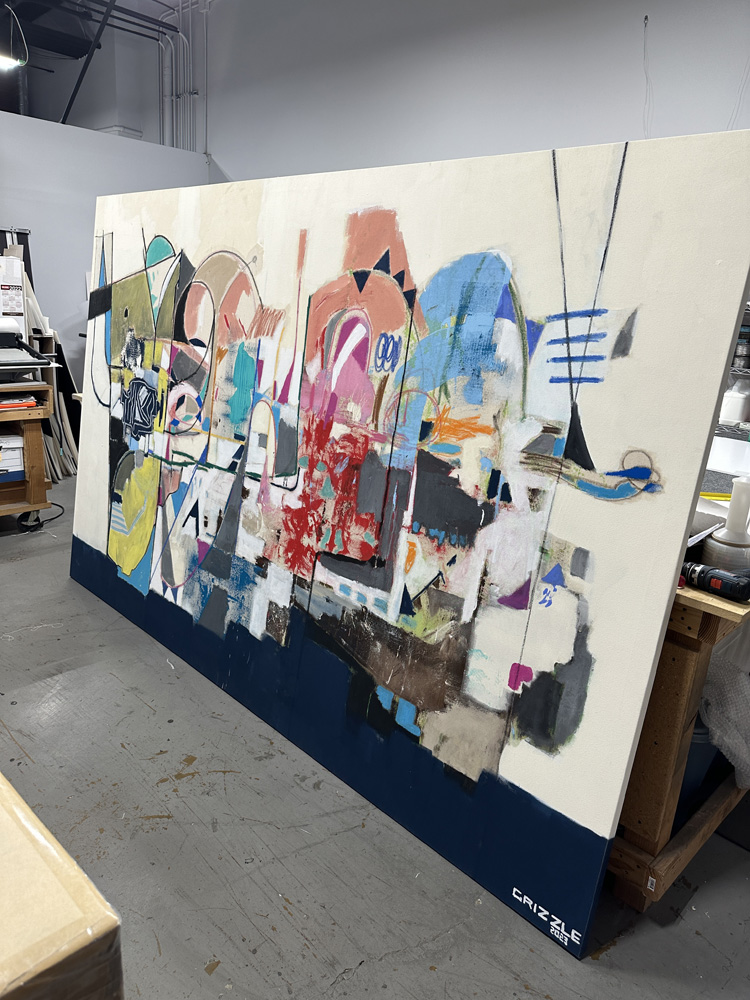
Structure
Large frames need structure sized for the span and weight.
Size alone does not determine the build. Weight, depth, glazing and how the piece will be handled all affect the structure.
Span and stiffness
Long rails and large supports need enough depth and stiffness to resist bowing and racking.
Internal support
Depending on the piece, we may use heavier moulding, built-up support, hardwood, metal reinforcement, cross-bracing or rigid backing.
Finished weight
Glazing, backing, frame depth and hardware can change the finished weight substantially, even when two artworks have similar outside dimensions.
Large glazed work
At large sizes, glazing becomes a structural and safety decision.
Glass stays rigid but gets heavy and can break. Acrylic is lighter and shatter-resistant, but large sheets need enough thickness and support.
Weight
Glass: heavy; load rises quickly with area. Acrylic: much lighter, which can be a major advantage on large work.
Rigidity
Glass: rigid at standard picture-framing thickness. Acrylic: stiffness depends strongly on sheet thickness and span.
Breakage
Glass: can break and create sharp fragments. Acrylic: impact resistant and safer for many transport situations.
Static
Glass: low static. Acrylic: ordinary acrylic can carry static; anti-static products are available for sensitive media.
Surface
Glass: hard and scratch resistant. Acrylic: softer and requires more careful cleaning, although coated products improve performance.
Clearance
Large glazing can flex during handling. The frame must provide enough separation to keep the glazing away from the artwork.
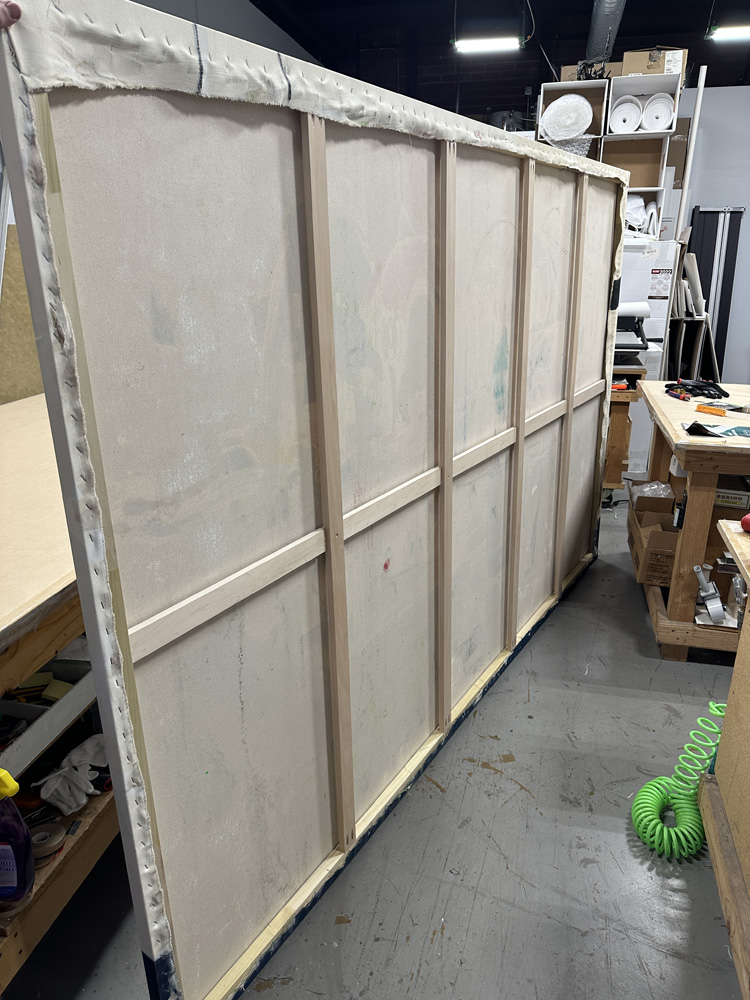
Backing and bracing support the whole frame
Rigid backing can protect canvas and add stability. Large works on paper may also need a more rigid back mat or panel.
Large canvas
Large canvases need proper bracing.
Long spans may need deeper perimeter bars, crossbars or custom construction to stay square and resist movement.
Perimeter
Light-duty bars can bow under tension; deeper or engineered profiles add stiffness.
Brace grid
Crossbars and intersecting braces help keep the stretcher square and control long unsupported spans.
Back protection
A rigid backing board protects the canvas from impact, dirt and vibration.
Custom supports
Very large or unusual canvases may need custom hardwood, engineered wood or metal-and-wood support systems.
Handling & access
Check the route before the frame is built.
Doorways, elevators, stair turns, hallways and installation height can change the construction.
Measure the artwork
Outside dimensions, depth, weight and anything fragile or projecting.
Measure the route
Doors, elevators, stairs, turns and ceiling heights can limit the size or orientation of an assembled frame.
Plan transport
Some projects travel fully assembled; others need sectional or site-assembled construction.
Plan protection
Face protection, backing, handling and crating are planned around the size and glazing.
Plan installation
Hardware, wall conditions, access and crew needs are worked out before the project reaches the wall.
Delivery & installation
Delivery and installation are part of the planning.
For very large work, the finished frame has to be designed around how it will be moved, protected and installed.
Handling and installation
When specialist handling is needed, we coordinate outside installers and art handlers and provide the information they need for the finished piece.
Delivery and crating
For delivery, crating or specialized shipping, dimensions, weight and handling requirements are established before the frame is finished.
Oversized reference
Oversized Framing Reference
Structure, glazing, handling and installation decisions that become critical as scale increases.
At large scale, stiffness matters as much as strength.
A component can be strong enough not to break and still flex too much. Long frame rails, acrylic sheets, stretchers and backing panels all deflect under their own weight. Oversized framing is therefore about controlling movement as well as carrying load.
What changes with scale
- Long mouldings need adequate section depth and joinery.
- Large acrylic may require greater thickness or more clearance because it can bow.
- Backing boards need enough rigidity to stay off the artwork and protect the reverse.
- Large canvas stretchers need bracing that controls racking and long unsupported spans.
- Hanging hardware must distribute the total finished weight into the wall structure.
More material is not always the answer.
A heavier build increases the load on joinery, hardware, handlers and the wall. Good structural design puts stiffness where it is needed rather than simply making every component thicker.
The glazing decision changes quickly as the frame gets larger.
Glass adds significant weight and breakage risk. Acrylic is lighter and impact resistant, but ordinary acrylic can develop static and will bow if it is too thin for the span. The artwork, size, media, transport route and installation location all matter.
Large works on paper
The sheet needs enough clearance that glazing deflection cannot bring the surface into contact during handling or seasonal movement. Large float mounts also require support that allows the paper to move without sagging or tearing at a few hinges.
Friable media
Pastel and charcoal complicate acrylic use because of static. Anti-static acrylic, glass or a different enclosure design may be needed. We make that decision before ordering a large glazing sheet, not after the artwork is already mounted.
Safety and handling
The lightest glazing is not automatically the safest overall solution, and the most rigid glazing is not automatically practical. We balance breakage, flex, surface sensitivity, weight and the realities of getting the finished piece into the building.
Large paper and large canvas fail in different ways.
Large paper
Large sheets can sag, cockle and place high loads on a small number of hinges. The mount may need broader support, edge strips, a recessed platform or a different attachment pattern. The frame also needs sufficient glazing clearance across the full span.
Large canvas
Canvas needs a stiff, square auxiliary support with bracing sized to the span. A rigid backing board reduces vibration and protects the reverse. If the painting is glazed, the additional weight and frame depth become structural issues.
Panels and rigid supports
Large panels may be heavy and can warp. The frame should support the panel without forcing it flat, while hardware and backing are sized for the actual weight rather than a nominal frame size.
The route is part of the design.
A frame that cannot turn the stair landing or fit into the elevator is not a successful frame. We want access information before the final outside dimensions are locked.
Measure more than the wall
- Entry doors, corridors, elevators and stair turns.
- Ceiling height and handrails where a large piece has to rotate.
- Loading areas and vehicle access.
- Protective wrapping thickness and handling clearance.
- Whether glazing can be installed or removed on site if the project requires a split installation strategy.
Transport
Oversized art is vulnerable to vibration, flex and impact. Wrapping, crating and vehicle restraint are planned around the object and frame. Heat and rapid temperature changes are additional concerns in Arizona, particularly during summer loading and unloading.
The wall has to carry the frame, not just receive a hook.
Installation planning starts with the finished weight, wall construction, frame structure and desired position. Large pieces may require cleats, multiple attachment points, engineered anchors or coordination with a contractor or professional art installer.
What we confirm
- Wall material and whether framing, blocking or masonry can be accessed.
- Total finished weight and center of gravity.
- Whether the artwork needs security hardware or anti-lift measures.
- Clearances from floors, furniture, sprinklers, doors and other architectural elements.
- Whether future removal can be done without dismantling the frame.
Site conditions
Exterior walls, strong sunlight, HVAC discharge and sources of moisture can be more important to preservation than the exact fastener used. Installation is the last chance to make sure the environment makes sense for the object.
For oversized work, call before you transport it.
Send dimensions and photos of the artwork, access route and wall when those details affect the build.