
Frames · materials · finishes
The Frame Library gives us an unusually broad range of profiles and finishes.
Wood species is only one part of the decision. Profile, finish, sheen and the inside edge often matter more than the name on the sample.
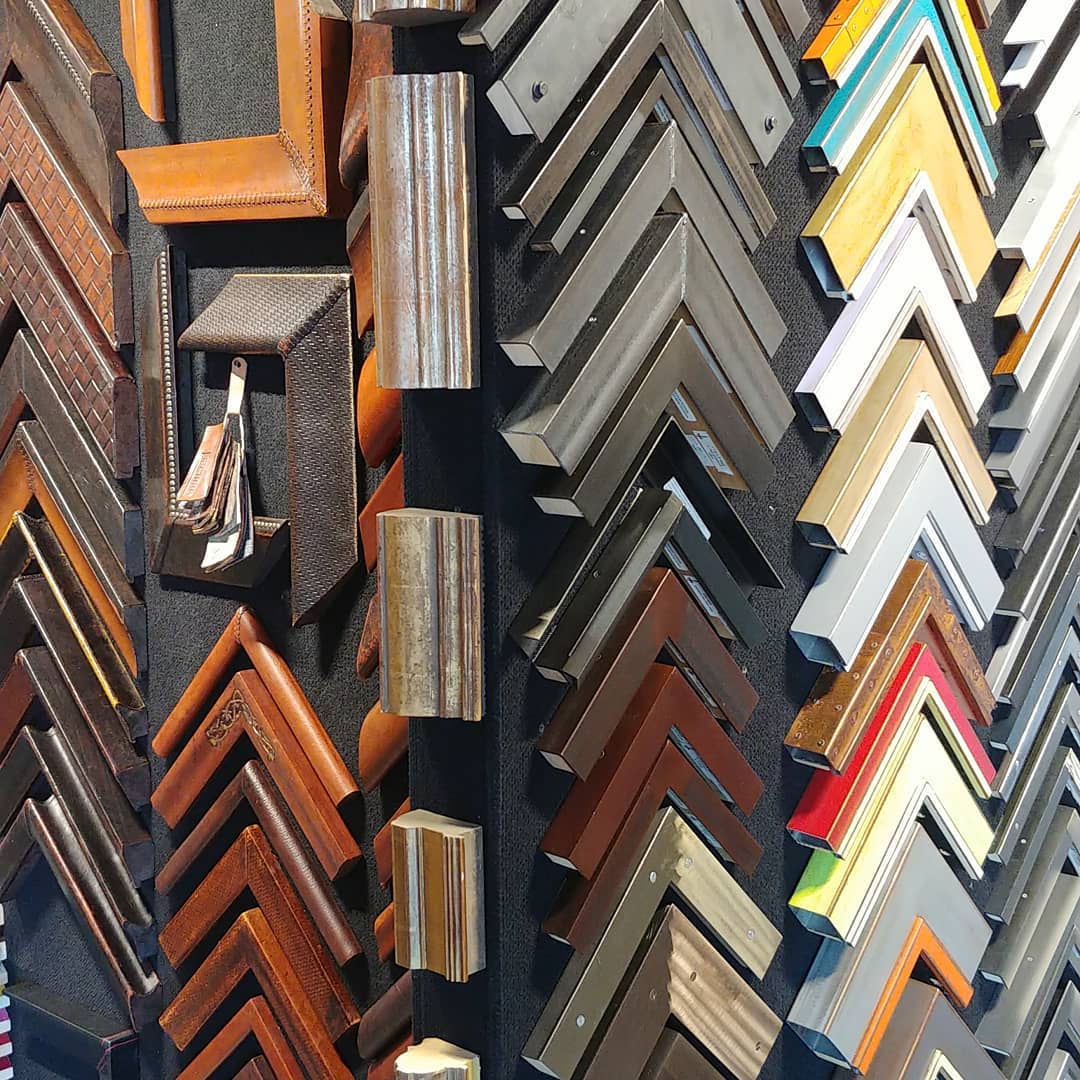
Choosing wood
We choose wood for both appearance and construction.
Walnut, maple, oak, cherry, ash and other woods differ in grain, color, strength and finish. We choose the species for the look and construction we need.
Walnut and deeper wood tones
Walnut and other darker woods bring visible grain and warmth.
Maple, oak, cherry, ash and related woods
Maple, oak, cherry and ash can stay natural or be toned and stained; their grain ranges from subtle to pronounced.
Pine, basswood and engineered construction
When a frame will be painted, gessoed, gilded or wrapped, we choose the underlying wood for construction and finish performance.
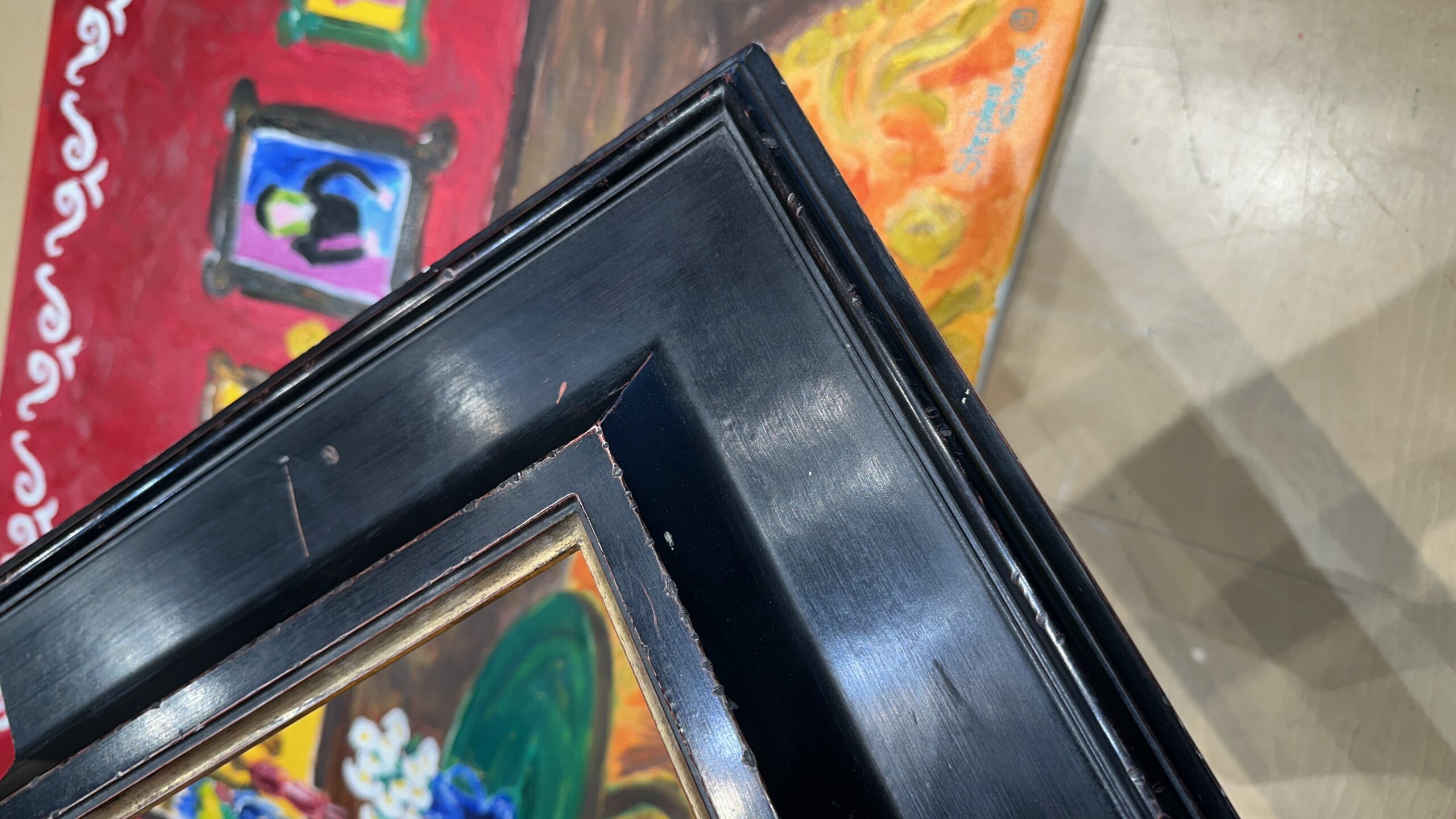
Finish changes the color, sheen and detail of a simple profile
Wax, stain, lacquer, paint, powder coat, leaf and patina change color, sheen and edge definition. Material and finish are chosen together.
Metal, acrylic and specialty materials
Metal and specialty materials give us different shapes, depths and surfaces.
Welded metal, leather and other materials give us narrow lines, unusual depths and different textures.
Welded and fabricated metal
Steel and aluminum allow crisp lines, unusual depths and custom shapes.
Clear and colored acrylic
Acrylic is useful when transparency is part of the design.
Wrapped surfaces
Leather and fabric add texture and color to frames, liners and inner details.
Custom-cut mirrors
We cut mirrors to custom shapes, including curved edges, and coordinate the frame, bevel, finished size and installation.
Frame finishes
The finish can completely change how a frame looks.
Matte, rubbed, polished, painted, gilded and patinated surfaces reflect light differently. The finish can completely change the same profile.
Natural wood finishes
Wax, clear finish, stain and dye: keep the grain visible while changing color and sheen.
Paint and lacquer
Paint and lacquer: provide a clean, consistent color.
Gold and metal leaf
Gold and metal leaf: can be bright, matte, toned, rubbed or distressed.
Patina and metal finishes
Patina, glaze and powder coat: change color, depth and sheen on wood or metal.
Mats, liners and details around the artwork
Mats, liners and inner frames shape the space around the artwork.
They add space, a defined edge, fabric or a small line of color around the artwork.
Window and float presentations
Matboard comes in different plys, colors and surfaces; width and bevel affect the proportion.
Thicker and multi-layered mats
Thicker mats create a deeper bevel and more separation from the glazing.
Fabric-covered mats and liners
Linen, silk and other wrapped surfaces add texture; sensitive artwork is isolated from fabric where needed.
French lines, specialty openings, liners and slips
Ruled lines, shaped openings and inner details can add a small accent.
How we use the Frame Library
We narrow the Frame Library to the options that suit the artwork.
We bring a few good options to the table first. The breadth of the Frame Library matters when those choices are not right.
Bring room finishes or material samples if they matter to the project.
Paint, fabric, stone, millwork and metal samples can help when the frame needs to relate closely to an interior.