
Custom picture framing · Scottsdale, Arizona
Good custom framing starts by looking closely at the piece.
The visible frame is only part of the job. Support, spacing, glazing, backing and hardware all have to work with it.
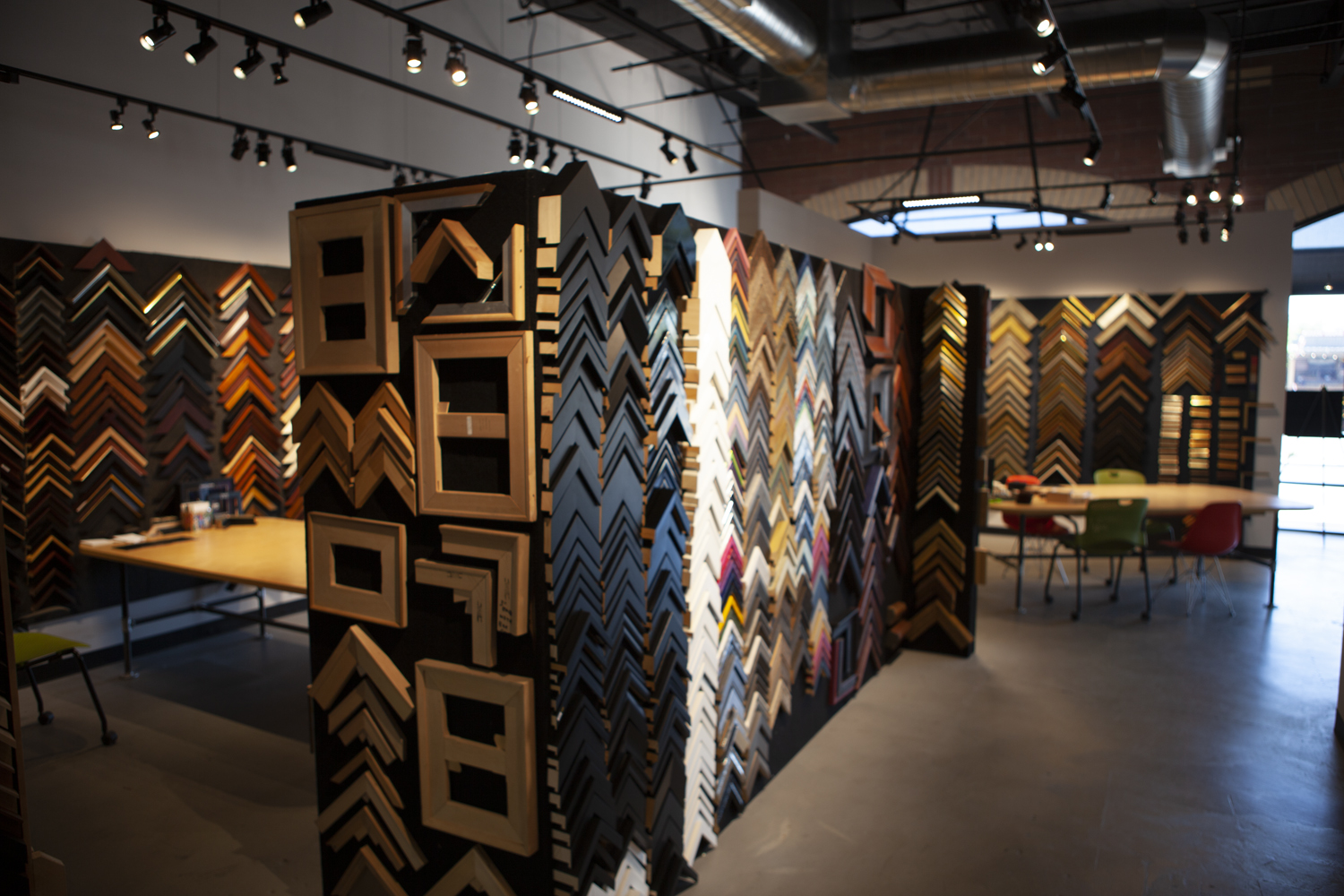
What custom framing includes
What actually goes into a custom frame.
Behind the moulding are the mat or spacer, mounting, glazing, backing and hardware that support the piece.
A watercolor, canvas, textile and photograph need different support. We look at the piece before we start pulling frame samples.
At the design table
We start with a few good options.
We start with a few frame directions that make sense for the piece and widen the search only when we need to.
Profile
Narrow, deep, flat, stepped and carved profiles create different edges around the artwork.
Finish
Wood, paint, metal, leaf, patina and hand-finished surfaces respond differently to color and light.
Space around the work
Mats, liners, float margins and spacers control the space around the artwork and the overall proportion.
Style and where it will hang
A frame can respect the period of a piece or give it a simpler contemporary look. We consider the room, but start with the artwork.
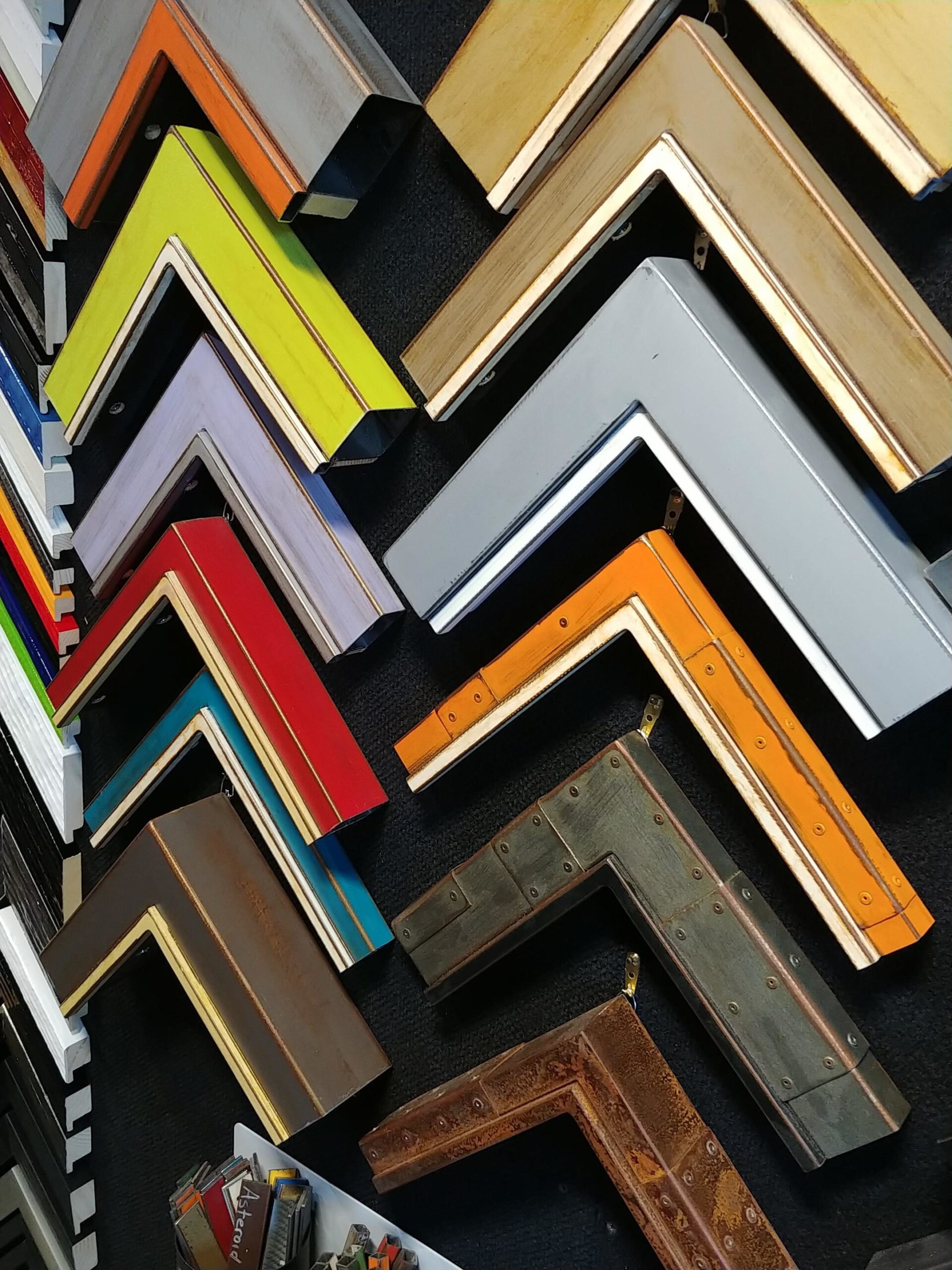
Use the Frame Library when we need more options
The Frame Library runs from contemporary profiles and hardwoods to welded metal, leather and carved or gilded finished-corner frames. That range matters when the first choices are not right.
Mounting and protection
The parts you do not see still matter.
We choose mounting, glazing and backing for the material, condition, size and display location.
Works on paper+
Works on paper may be window-matted or floated. Hinges, corners or other supports are chosen for the sheet and media, with enough space from the glazing.
Canvas+
Canvas framing starts with the stretcher or strainer, bracing, edge condition and tension. The outer frame is designed around that structure.
Textiles+
Textiles need broad support. Stitching, padding and glazing clearance depend on the textile itself.
Glazing+
Glass and acrylic have different weight, breakage, static and scratch characteristics. Frame size and lighting matter too.
Backing and fitting+
Backing protects from dust and contact and adds rigidity. Hardware is sized for the finished weight and installation.
From approved design to production
Once approved, the design becomes a clear workshop specification.
We record the measurements, materials, glazing, mounting and hardware so the workshop builds the approved design.
- 01
Examine the piece
We check the medium, condition, edges, dimensions and any existing mounts or frames.
- 02
Develop the design
We work through profile, finish, matting or liner, glazing, spacing and proportion. Structural needs are planned early.
- 03
Specify and source
We record the dimensions and materials, then order or fabricate any specialty components.
- 04
Mount, fabricate and fit
In the workshop, we build the support and frame, fit the piece and install hardware for the finished weight.
- 05
Final review
We check finish, alignment, cleanliness and structural fit before the piece leaves the shop.
What to bring
Bring the piece. We’ll work through the frame with you.
The artwork is enough to begin. Room photos, paint, fabric or finish samples can help when the frame needs to relate closely to an interior.
The artwork or object
The original gives us the best sense of scale, surface, color and condition.
Where it will hang or be displayed
Bring room or finish references when they matter to the project.
Room, colors or other details
Tell us if the piece is light-sensitive, fragile, part of a series or needs to match earlier work.
Bring us the piece. We’ll start with a few good frame options.
Bring what you have. We’ll work through the frame, glazing and support choices with you.