
Frames · materials · finishes
Frames, materials and finishes.
Wood species is only one part of the choice. Profile, depth, finish, sheen and the inside edge usually matter just as much.
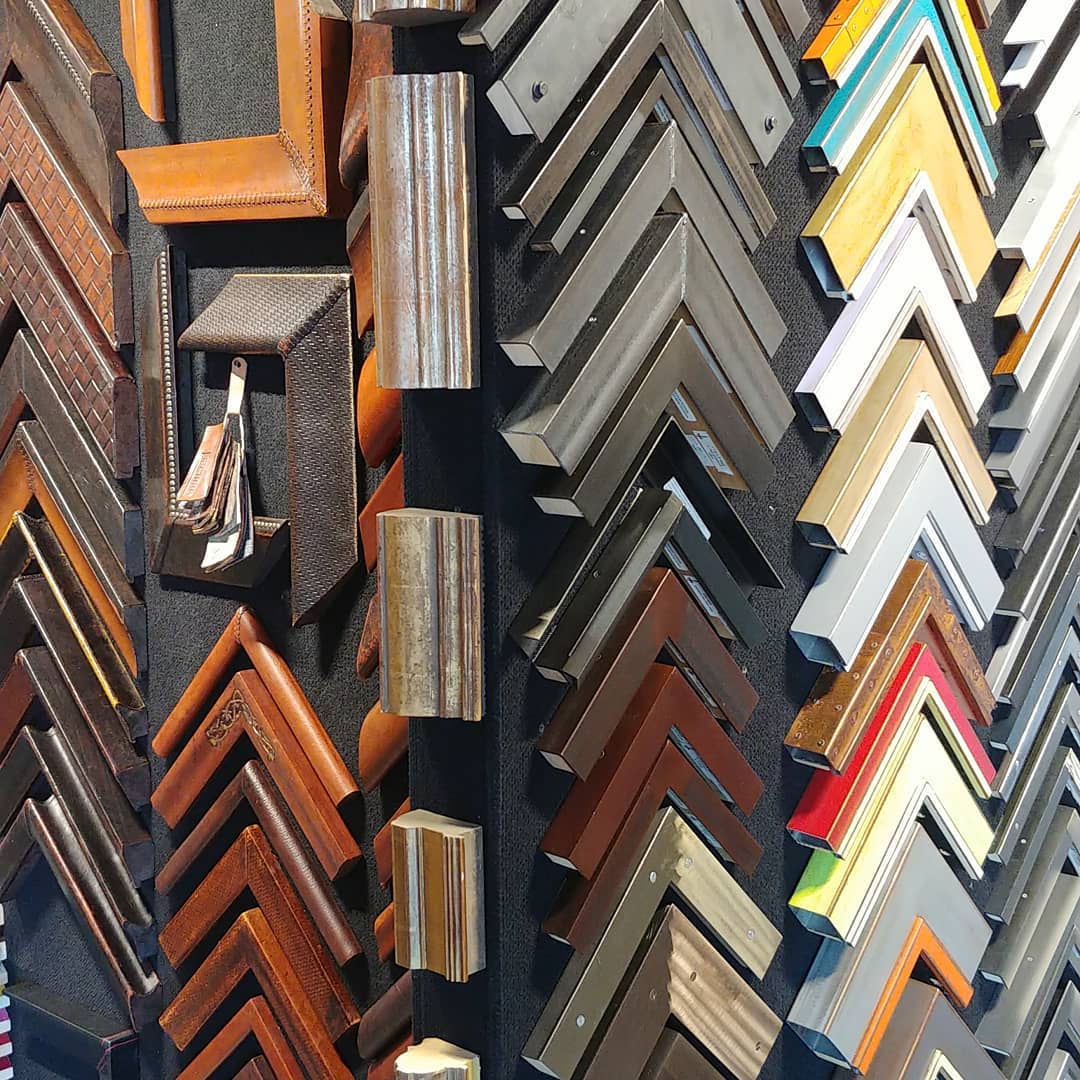
Choosing wood
Wood affects both the look and the construction of a frame.
Walnut, maple, oak, cherry, ash and other woods differ in grain, color and strength. We choose the species for the look and construction the frame needs.
Walnut and deeper wood tones
Walnut and other darker woods bring visible grain and warmth.
Maple, oak, cherry, ash and related woods
Maple, oak, cherry and ash can stay natural or be toned and stained; their grain ranges from subtle to pronounced.
Pine, basswood and engineered construction
When a frame will be painted, gessoed, gilded or wrapped, we choose the underlying wood for construction and finish performance.
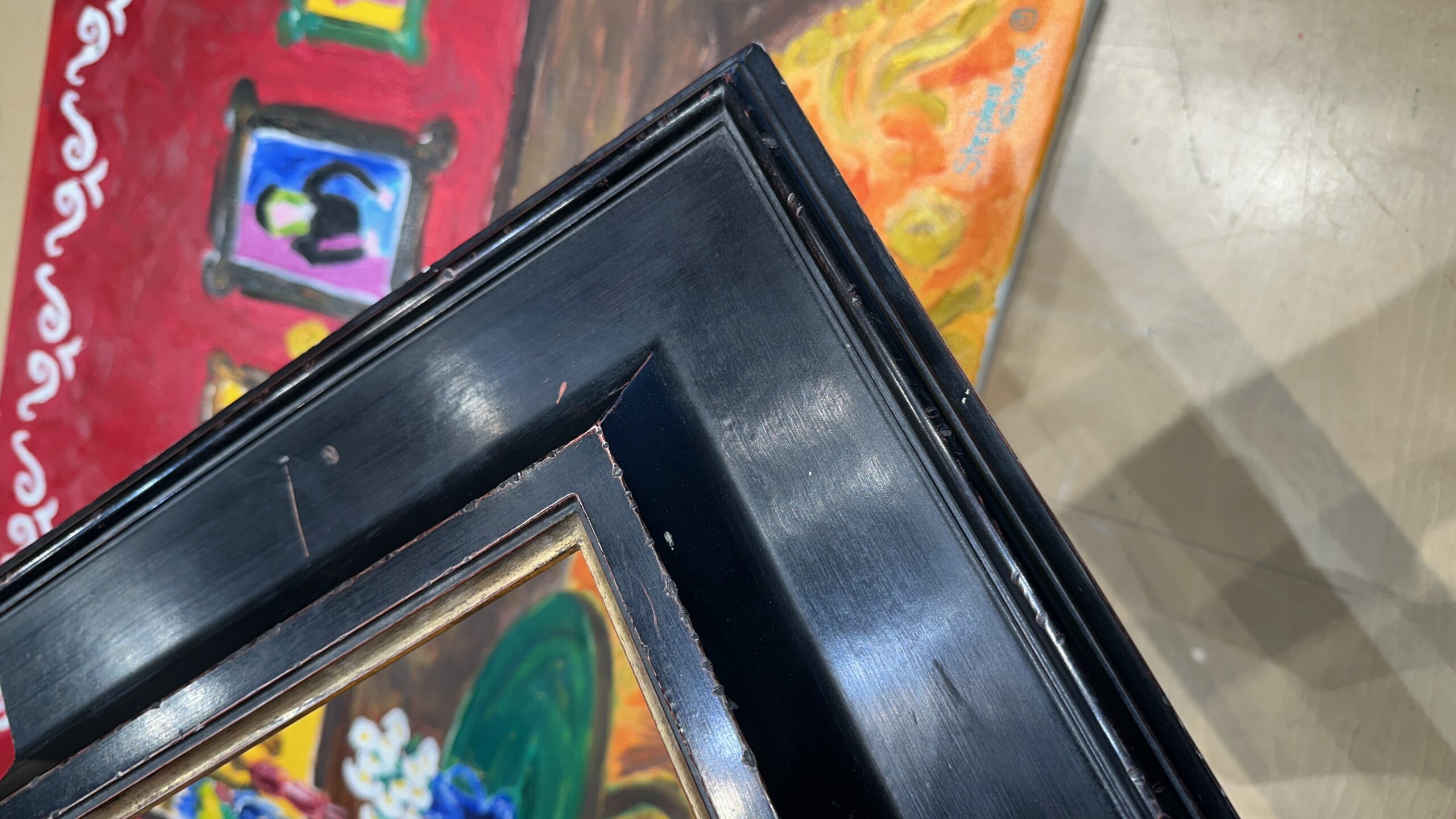
Finish changes color, sheen and edge definition.
Wax, stain, lacquer, paint, powder coat, leaf and patina change color, sheen and edge definition. Material and finish are chosen together.
Metal, acrylic and specialty materials
Metal and specialty materials open up different shapes, depths and surfaces.
Welded metal, leather and other materials give us narrow lines, unusual depths and different textures.
Welded and fabricated metal
Steel and aluminum allow crisp lines, unusual depths and custom shapes.
Clear and colored acrylic
Acrylic is useful when transparency is part of the design.
Wrapped surfaces
Leather and fabric add texture and color to frames, liners and inner details.
Custom-cut mirrors
We cut mirrors to custom shapes, including curved edges, and coordinate the frame, bevel, finished size and installation.
Frame finishes
Frame finishes
Matte, rubbed, polished, painted, gilded and patinated surfaces change color, sheen and the way a profile reads in the room.
Natural wood finishes
Wax, clear finish, stain and dye keep the grain visible while changing color and sheen.
Paint and lacquer
Paint and lacquer create a more uniform surface and give us precise control over color and sheen.
Gold and metal leaf
Gold and metal leaf can be bright, matte, toned, rubbed or distressed.
Patina and metal finishes
Patina, glaze and powder coating can change color, depth and sheen on wood or metal.
Mats, liners and details around the artwork
Mats, liners and inner frames shape the space between the artwork and frame.
They add space, a defined edge, fabric or a small line of color around the artwork.
Window and float presentations
Matboard comes in different plys, colors and surfaces; width and bevel affect the proportion.
Thicker and multi-layered mats
Thicker mats create a deeper bevel and more separation from the glazing.
Fabric-covered mats and liners
Linen, silk and other wrapped surfaces add texture; sensitive artwork is isolated from fabric where needed.
French lines, specialty openings, liners and slips
Ruled lines, shaped openings and inner details can add a small accent.
How we use the frame collection
We start with a small group of strong options.
We bring a few good options to the table first. The depth of the collection matters when those choices are not right.
If the first choices are not right, we keep looking.
If the first group is not right, we keep looking.
Materials reference
Materials Reference
A technical look at the boards, papers, adhesives, glazing, barriers and structural materials used inside a frame.
Preservation boards are specified by composition and performance, not by a marketing label.
Both 100% cotton rag board and highly purified, lignin-free alpha-cellulose board are used in preservation framing. We choose thickness, surface, color, buffering and contact method according to the object.
Questions that matter
- Is the board lignin-free and manufactured for preservation use?
- Is an alkaline reserve appropriate for the object?
- Does a photograph-contact material pass the Photographic Activity Test?
- Is the board stiff enough for the size and intended support?
- Will colored or decorative layers remain stable in long-term contact?
Matboard serves both structural and visual purposes.
It is a design material, but it is also a structural spacer and handling support. A window mat protects edges, keeps the object off the glazing and gives future handlers a safer surface to touch than the artwork itself.
Conservation adhesives are used in small, deliberate amounts.
Refined wheat starch paste and methyl cellulose both have legitimate roles in paper conservation. The decision depends on the paper, moisture sensitivity, required bond strength, working time and the way the mount may need to be reversed later.
Japanese tissue
Japanese kozo and related papers can provide high tensile strength with very little thickness. Different weights and fiber structures are selected so the hinge supports the object without creating a stiff stress point.
Wheat starch paste
A traditional paper-conservation adhesive with a long history of use. It can form a strong, small hinge and is removable by trained conservators with controlled moisture.
Methyl cellulose
A cellulose-based adhesive used in conservation for applications where its handling, viscosity or lower bond strength are useful. It is water-removable, but that does not mean it is the right hinge adhesive for every heavy or highly stressed sheet.
Pressure-sensitive adhesives
Some modern tapes are chemically stable and useful in the right context, but pressure-sensitive does not mean fully reversible from every original paper. We avoid using a convenient tape as a substitute for object-specific mounting.
Optics are only one part of glazing performance.
The glazing affects reflection, UV exposure, physical safety, weight, static, cleaning and frame depth. Museum-style anti-reflective products can make glazing visually disappear, but the structural and conservation tradeoffs still matter.
| Property | Why it matters |
|---|---|
| UV filtration | Reduces one damaging portion of the light spectrum; does not stop visible-light fading. |
| Anti-reflective coating | Improves clarity and viewing but requires correct cleaning and handling. |
| Static | Critical around pastel, charcoal and other loose media. |
| Weight | Changes frame construction, transport and wall hardware. |
| Breakage resistance | Important in public spaces, shipping and oversized work. |
| Scratch resistance | Especially important for acrylic glazing during cleaning and installation. |
Thickness matters.
Large acrylic sheets can bow. Large glass sheets become very heavy. We specify thickness and clearance with the span and the artwork in mind.
The back of the frame is part of the enclosure.
A rigid backing board protects from impact, dust and handling. In paintings, it also reduces vibration and buffers rapid humidity changes. In paper and textile frames, backing and edge sealing help keep dirt and pollutants out of the package.
Barrier materials
Sensitive objects should not rest directly against raw wood, acidic board or untested decorative material. Stable papers, boards, films and foil barriers can isolate the object from structural materials that are useful for strength but not ideal for contact.
Sealing
A sealed edge can slow dust and air exchange. It does not turn an ordinary frame into a permanent microclimate. Specialized sealed packages require careful design around permeability, moisture and the materials enclosed inside.
Structural materials have conservation consequences too.
Wood is strong, workable and ideal for many frames, but it contains acids and resins. Metals are strong and dimensionally stable, but bare reactive metals may corrode or stain nearby materials. Plastics and foams range from highly stable to unsuitable.
Wood
Use for structure and design, then isolate sensitive contents when necessary. Historic wood frames may themselves be collection objects and deserve a different approach from new moulding.
Metals
Steel and aluminum can make very thin or long structural members possible. Coatings and powder coats need appropriate cure time before they are enclosed with sensitive art.
Plastics and foams
Acrylic, polypropylene, polyethylene and related stable materials are widely used for mounts and backing. We avoid assuming that an unknown foam, PVC sheet or craft plastic is conservation-safe just because it looks inert.
A finish can be visually dry long before it is ready to live inside a closed frame.
Paints, lacquers, stains, sealers and adhesives cure by different mechanisms. Some release solvents or other volatile compounds as they cure. Inside a tightly closed shadowbox, those emissions have nowhere to go.
Our approach
- Finish structural parts before final fitting whenever possible.
- Allow coatings and adhesives enough cure time for the specific product and enclosure.
- Keep freshly finished surfaces from direct contact with sensitive artwork.
- Use barrier layers when the structural material and the object should be isolated.
- For unusual materials or high-significance objects, use conservator or manufacturer data rather than guessing.