
Finished-corner frames · carving · gilding
Gilded and finished-corner frames are built and finished as complete frames.
That allows seamless corners, carving, leaf, patina and hand-finished surfaces that are difficult to achieve with ordinary length moulding.
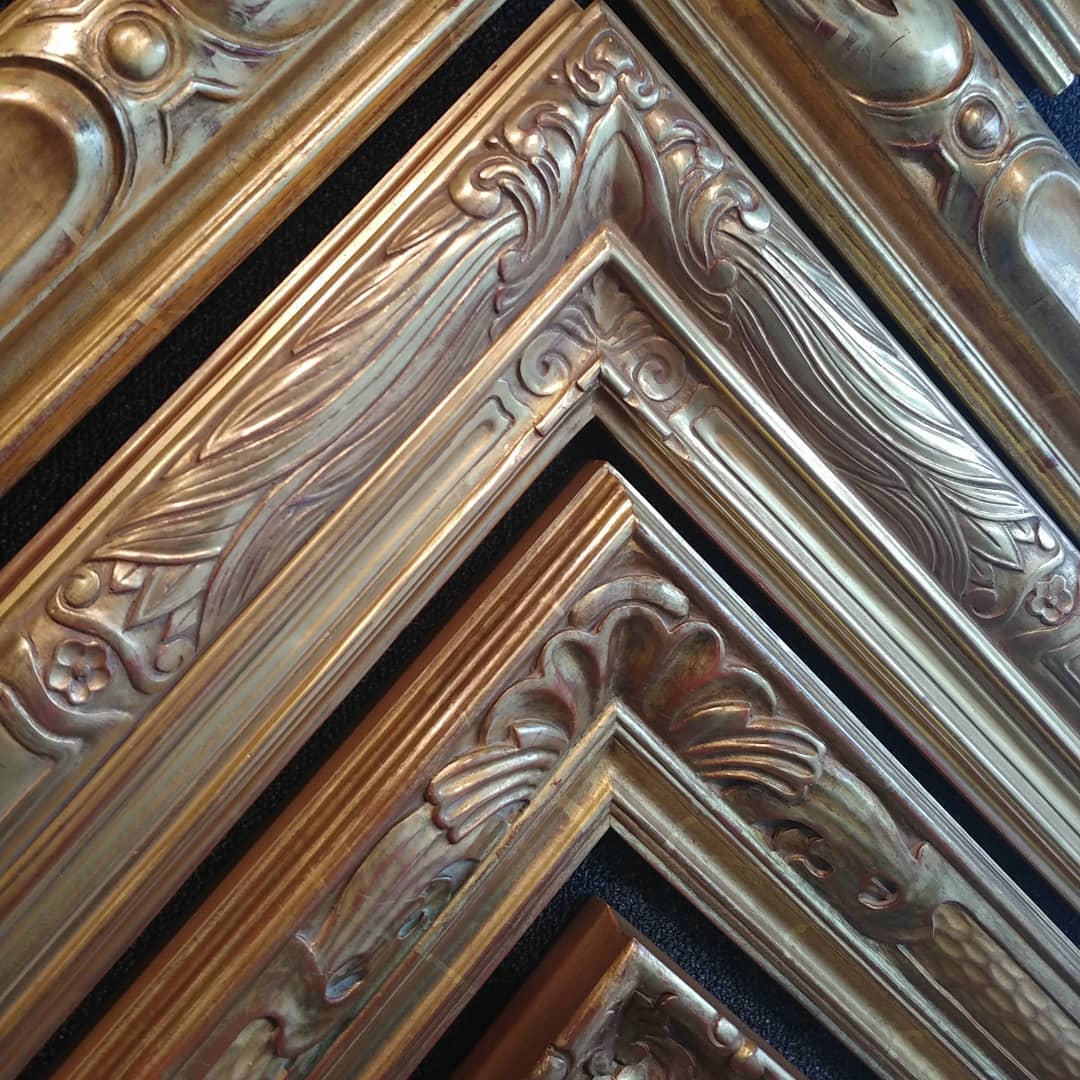
Finished after joining
Finished-corner construction creates a continuous surface.
Because the frame is joined before the final surface is applied, the finish can run continuously through the corners.
Length moulding is right for many projects. Finished-corner construction becomes useful when the design calls for seamless corners, carving, gilding or a custom surface.
Closed corner describes the process, not one style.
Closed-corner frames can be ornate or minimal, historical or contemporary, painted, stained or gilded.
Water gilding and oil gilding
Water gilding and oil gilding have different looks.
Both use metal leaf, but the preparation differs. Water gilding can be burnished bright; oil gilding stays softer and more matte.
Water gilding
Gold leaf is laid over gesso and bole; burnishing creates bright highlights and the bole affects the warmth.
Oil gilding
Leaf is laid on an oil-based size and usually stays softer or more matte than burnished water gilding.
Using both on one frame
Water and oil gilding can be combined on the same frame to vary sheen and emphasis.
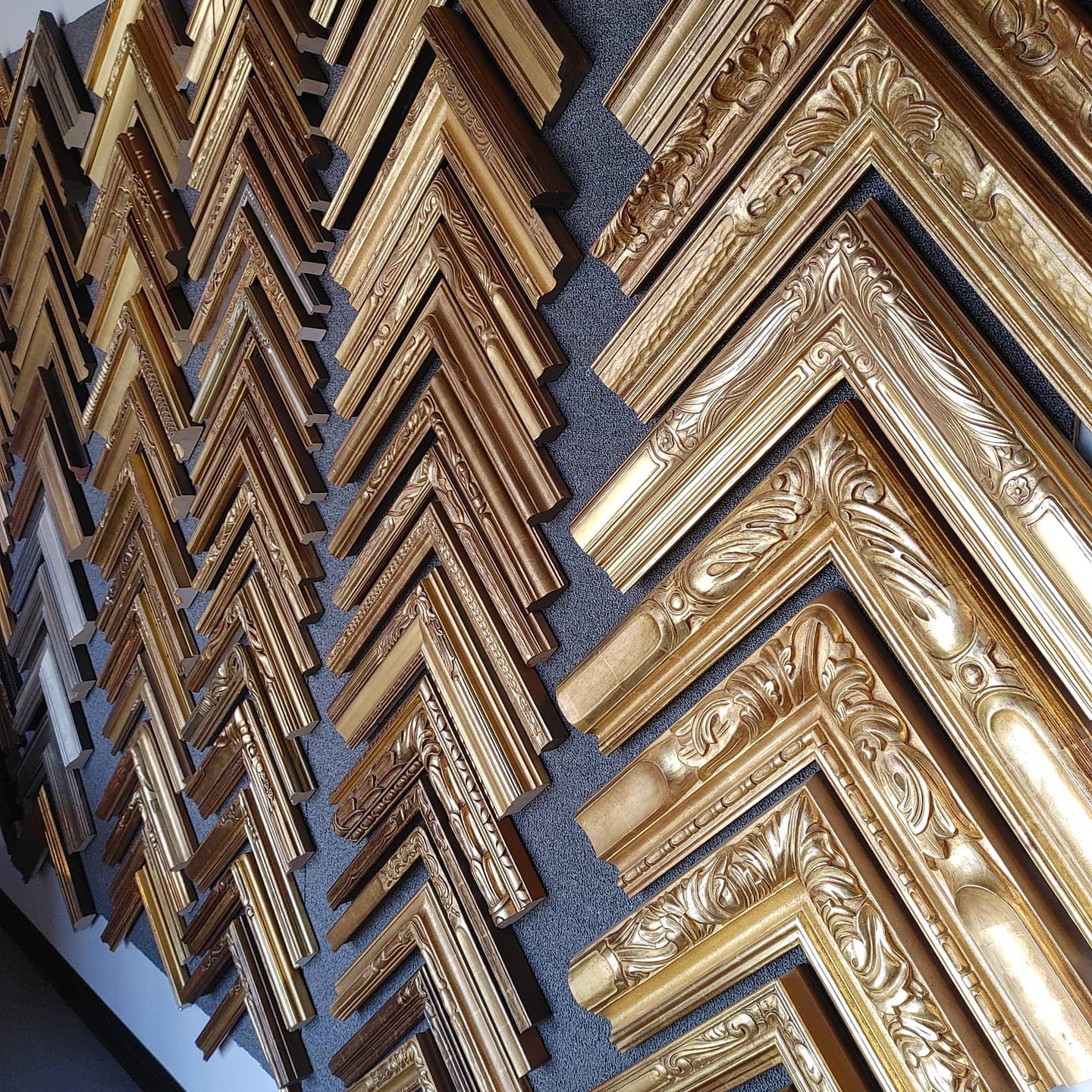
A corner sample shows the actual finish
Carving, leaf tone, bole color, burnish and patina vary by maker. The frame collection gives us several specialist sources to compare.
Surface preparation
The layers beneath the leaf determine the final surface.
Gesso, bole, carving, sanding and burnishing create the surface the leaf reveals.
Gesso and bole
Gesso creates the smooth ground; bole affects the warmth of the gold and supports burnishing.
Carving and ornament
Carving and ornament shape how light moves across the frame.
Burnishing
Burnishing creates reflective highlights in water-gilded leaf.
Toning and patina
Glazes, pigments and rubbing can mute leaf and emphasize recesses.
Historical frame references
Historical frames can be useful references.
An original frame or historical style can provide a starting point. We may follow it closely or carry only the proportion, leaf color or profile into a simpler frame.
Original frames
An original or artist-selected frame can be historically significant; wear alone is not a reason to discard it.
Reproduction frames
Specialist makers can reproduce historical profiles, carving and gilding when an accurate period frame is appropriate.
Interpretive frames
A new frame can reference period through profile, leaf color, patina or ornament without copying every detail.
Frame restoration
We handle light refinishing in our frame shop. Major gilding, carving or structural restoration is coordinated with a specialist.
Gilding houses & finished-corner sources
We work with several specialist frame makers.
Each maker has different strengths in carving, gilding, finish and historical styles. We choose the one that fits the artwork and the frame we are trying to make.
Carved and water-gilded frames
For frames where hand preparation, leaf and historically informed surface are central.
Subtle finished-corner frames
For seamless painted, stained, rubbed or selectively leafed frames.
Leather, metal and unusual surfaces
When a project needs materials beyond standard moulding.
Contemporary and everyday moulding
Length moulding remains an excellent option when the profile and finish are right.
Frame conservation reference
Historic & Gilded Frame Reference
How gilded surfaces, original frames and historic finishes are evaluated and protected.
A water-gilded frame is a layered object.
Traditional gilded wood commonly includes carved or moulded ornament, gesso preparation, colored bole and extremely thin metal leaf. Burnished and matte passages may be intentionally different. Damage in any layer can affect everything above it.
Why water gilding is fragile
The brilliant burnish comes from a carefully prepared ground and bole beneath the gold. Moisture can disturb these water-sensitive layers. Aggressive rubbing can remove leaf quickly. A frame can look structurally robust while its surface is extremely delicate.
Oil gilding
Oil-gilded surfaces use an oil-based size and cannot be burnished in the same way. They have different visual and treatment characteristics. Many historic frames combine multiple gilding methods, toning and painted decoration.
Age, grime and original toning are not the same thing.
Historic frames accumulate wear, toning, old coatings, repairs and sometimes later bronze paint or regilding. Some of that is damage; some is part of the object’s history. The goal is not to make every old frame look new.
What we look at
- Whether leaf, gesso and ornament appear original or later.
- Where surfaces are lifting, powdering or mechanically weak.
- Whether dark areas are intentional toning, stable age, grime or later coating.
- Old repairs, fills and replacement ornament.
- Labels, joinery, inscriptions and construction evidence on the reverse.
Gilded surfaces can be permanently damaged by improper cleaning.
Water-gilded and painted surfaces can be irreversibly damaged by household cleaners, water, solvents, metal polish and vigorous dusting. Even professional frame conservators test cleaning systems because different layers can respond very differently.
At the frame shop
We can identify loose ornament, unstable gilding, structural joint problems and obvious later coatings. We handle stable frames carefully and can coordinate specialist frame conservation when the surface requires treatment.
When specialist treatment is appropriate
- Flaking or lifting gesso and gilding.
- Historic frames with significant original surfaces.
- Major ornament loss or failed earlier repairs.
- Overpaint or bronze paint covering earlier gilding.
- Cleaning that would require solvents, gels, consolidation or inpainting.
The best frame decision is sometimes to preserve the one already there.
An original or period frame can be important evidence about the artwork’s history. Before replacing it, we look at date, style, construction, labels, fit and condition. A later but high-quality frame may also have value or provenance.
When a new frame makes sense
The existing frame may be structurally unsafe, visually unrelated, too shallow for a protective package, or historically inappropriate. In those cases a new frame can be designed around the artwork while the older frame is preserved separately if it has significance.
Reproduction and period-informed work
When a period look is appropriate but an original frame is unavailable or unsuitable, carved, closed-corner and hand-finished reproduction work can provide the right visual language without misrepresenting a modern frame as an original.
Finished-corner frames are easiest to judge with the artwork in front of you.
If this is the direction you are considering, bring the artwork to Old Town and we can compare real corner samples at the design table.