
Custom frame design
Frame design begins with the artwork.
Proportion, profile, finish, depth and the space around the piece all affect the finished frame. We compare those choices directly with the artwork.
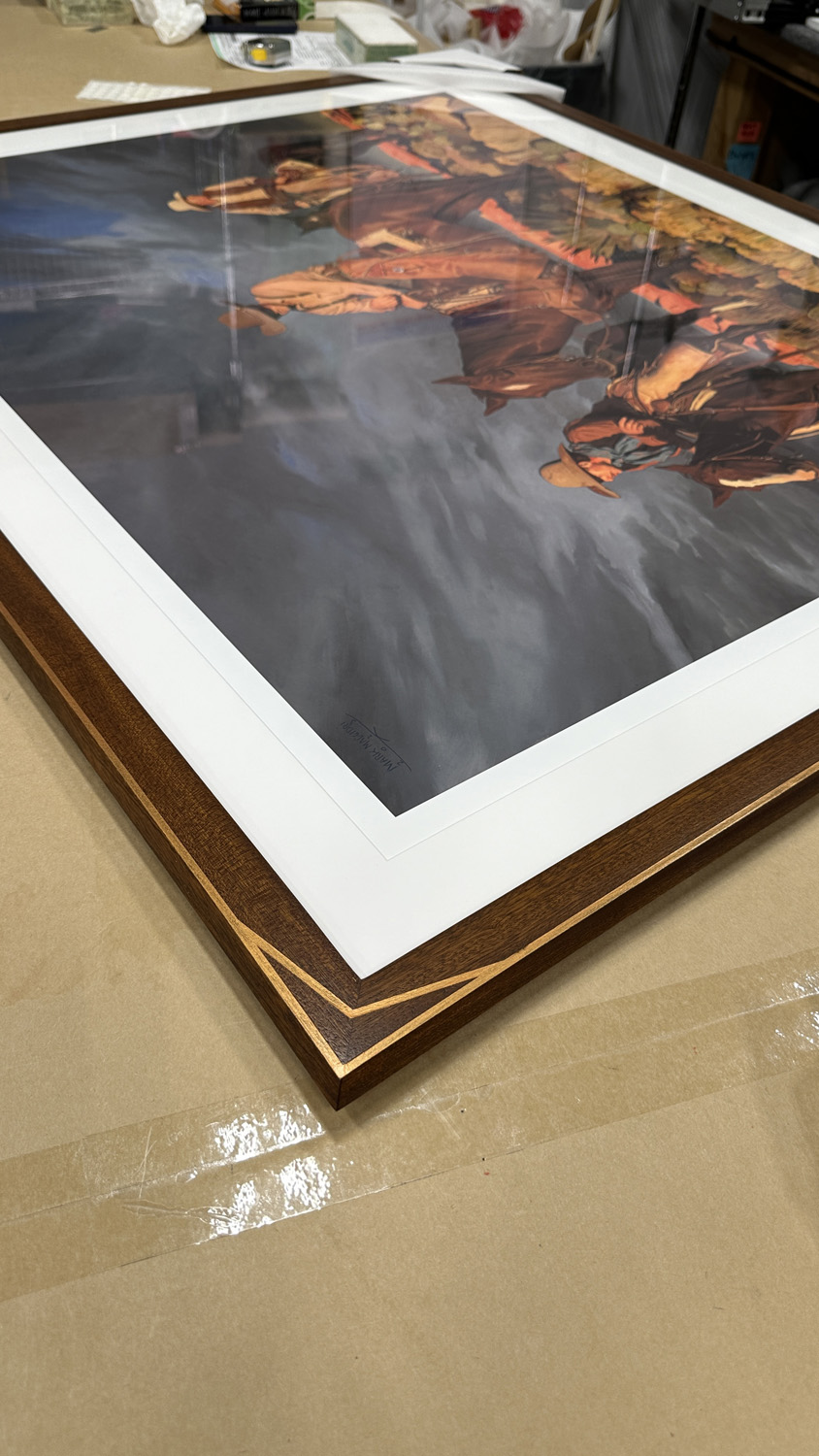
First design decision
Start with proportion.
Frame width is only part of the picture. Depth, the inside edge and the amount of space around the artwork all change how substantial the frame feels.
Mat width, liner width, float gap and frame face are judged together, not as separate measurements.
The same frame can read very differently from one artwork to another.
The same two-inch moulding can feel substantial on one piece and too small on another.
Choosing the frame profile
The profile changes the line and shadow around the artwork.
A flat face, scoop, step or deep narrow profile can make the same artwork feel very different. The inside edge matters especially because it sits closest to the piece.
Clean, simple profiles
Flat and architectural frames create a clear edge with little ornament.
Scoops, coves and stepped profiles
Curves and stepped planes change the shadow and depth around the artwork.
Narrow deep profiles and float frames
Around canvas and panels, depth can matter more than face width. Float frames also reveal the artwork’s edge.
Carved and specialty profiles
Carving and ornament can reinforce period and scale when more detail is appropriate.
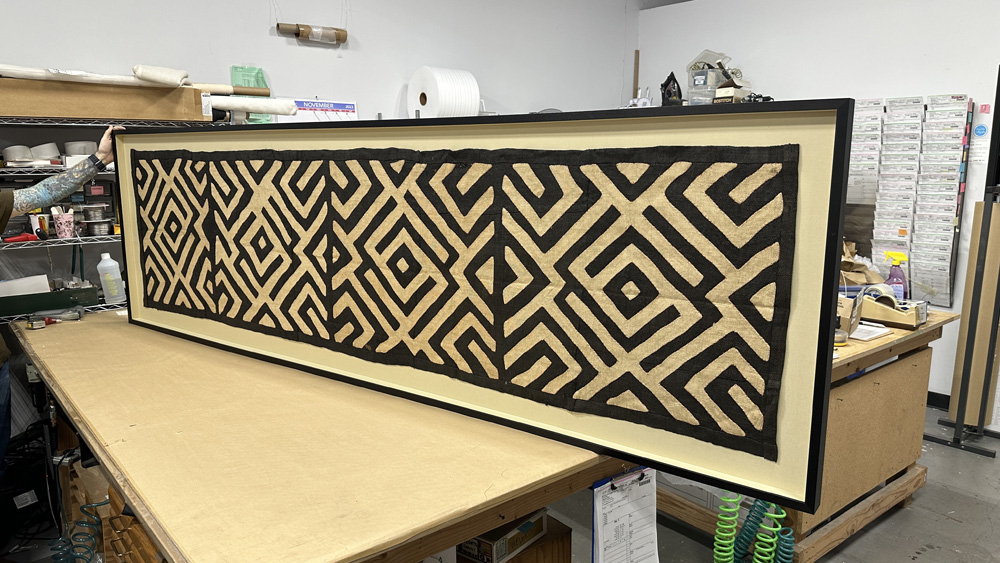
Simple frames depend on proportion
Simple frames depend on proportion, reveal, wood tone and edge detail.
Choosing the finish
Finish includes color, sheen, grain and surface.
Warmth, sheen, grain and the way the surface catches light often matter more than an exact color match.
Wood grain and tone
Walnut, maple, oak and other woods can stay natural or be stained, waxed or toned.
Opaque and custom color
Painted and lacquered finishes provide color without imitating wood.
Metal, leather and fabric
Metal, leather and fabric provide different lines and textures.
Gilding, toning and aged surfaces
Gold or metal leaf can be bright, matte, toned or distressed; patina changes how the surface catches light.
The space between art and frame
The space between the artwork and frame is part of the design.
Mats, liners, slips, float margins and shadowbox depth control the space between the artwork and outer frame.
Window mats+
A window mat adds space around paper and separates it from glazing. Width, color, bevel and ply depth affect the proportion.
Float mounts+
A float mount reveals the sheet edge; the float margin and glazing spacer become part of the design.
Fabric liners+
Hand-wrapped linen or silk liners add a fabric edge. Sensitive artwork is isolated from the fabric where needed.
French lines and specialty matting+
Ruled lines, shaped openings and layered mats can add period detail or a small graphic accent.
Canvas float gaps+
Canvas float gaps range from a narrow shadow to a wider reveal and are sized to the canvas and frame.
The frame collection
The frame collection gives us more options when the first choices are not right.
It includes everyday mouldings, finished-corner frames, hardwoods, metal and specialty materials.
Everyday mouldings
Contemporary, traditional and specialty mouldings cover most everyday work.
Finished-corner and handmade frames
Carved, gilded and hand-finished frames give us more surface and period options.
Hardwoods, metal and specialty surfaces
Hardwoods add visible grain and can be stained, toned or waxed.
Leather, acrylic and unusual materials
Leather, welded metal, acrylic and fabricated components extend the material range.